

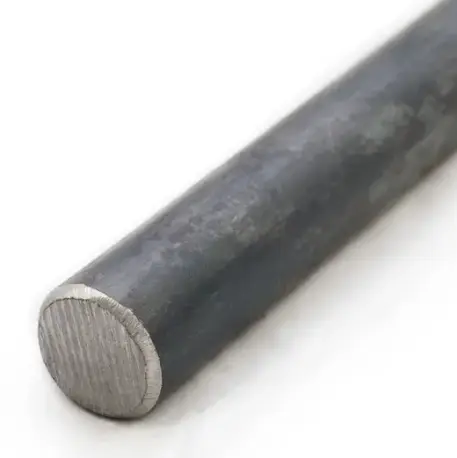
About Solid Steel Round Bar
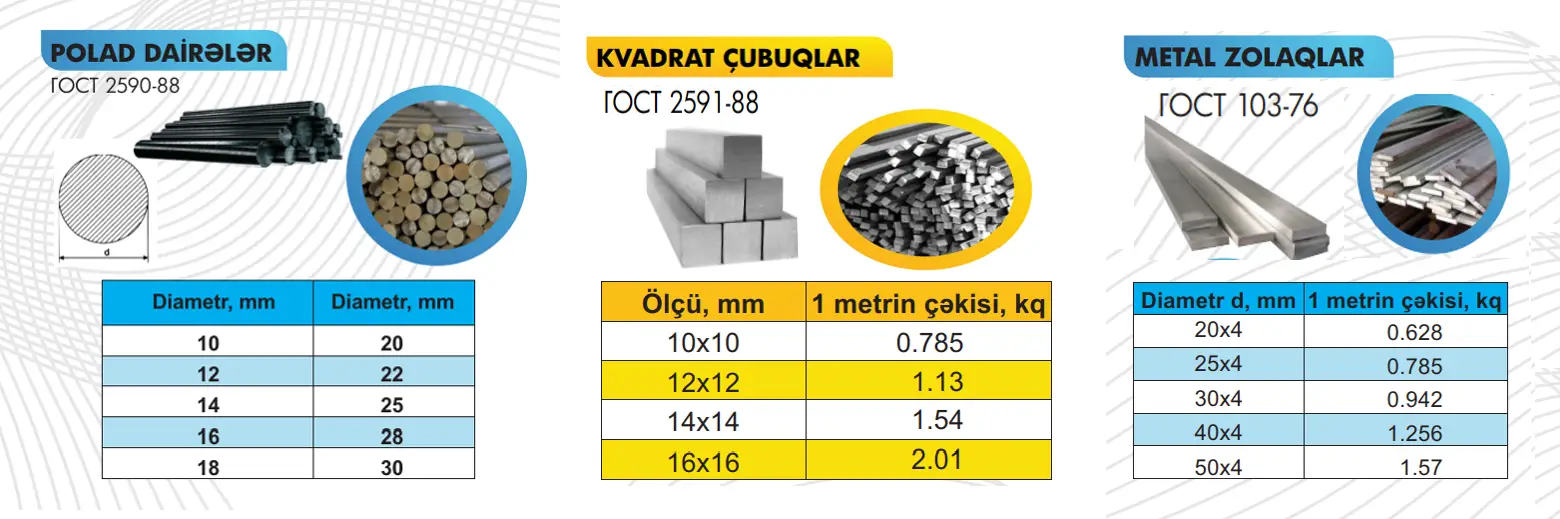
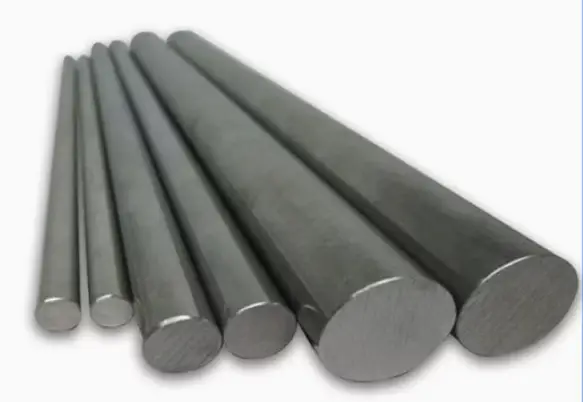
Solid steel round bar (steel round bar) — meaning a solid round steel bar — is one of the most widely used semi-finished materials in industry.
Physicochemical Composition:
Low carbon steels have a low carbon content, which makes them softer and more machinable.
Typical Chemical Composition (in %):
| Element | Quantity (%) |
|---|---|
| Carbon (C) | 0.05-0.25 |
| Manganese (Mn) | 0.25-0.80 |
| Silicon (Si) | ≤ 0.40 |
| Sulfur (S) | ≤ 0.05 |
| Phosphorus (P) | ≤ 0.04 |
| Iron (Fe) | Base element |
Physical & Mechanical Properties:
| Property | Indicator |
|---|---|
| Density | ~ 7.85 g/cm 3 |
| Tensile Strength | 350-500 MPa |
| Yield Strength | 200-300 MPa |
| Elongation | high |
| Hardness | low-medium |
| Weldability | very good |
Areas of Application
Low carbon steel round bars are widely used in:
-
Mechanical and Industrial Fields
- Shafts and axles
- Bolts, studs, rods, and fasteners
- Machining of mechanical parts (turning, milling)
-
Construction and Metal Structures
- Support elements
- Metal frameworks
- Auxiliary structural parts
-
Automotive and Machine Building
- Low-loaded parts
- Housing and frame parts
-
General Manufacturing
- Suitable material for cold and hot forging
- In mass-produced parts
Advantages:
-
High plasticity and elasticity
-
Very good weldability
-
Easy mechanical machining (cutting, turning, milling)
-
Low cost
-
Wide selection of sizes and standards
Limitations:
-
Not suitable for applications requiring high strength
-
Hardness is difficult to increase significantly via heat treatment
-
Poor resistance to wear and fatigue
-
Requires corrosion protection (coating, paint, galvanizing)
Conclusion
Low carbon steel solid round bars are:
- inexpensive
- easily machinable
- ideal for welding
but
- are limited materials for heavily loaded and wearing parts.
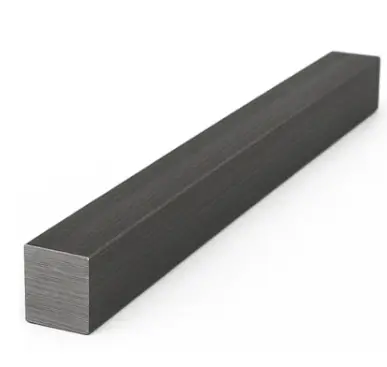
About Solid Steel Square Bar
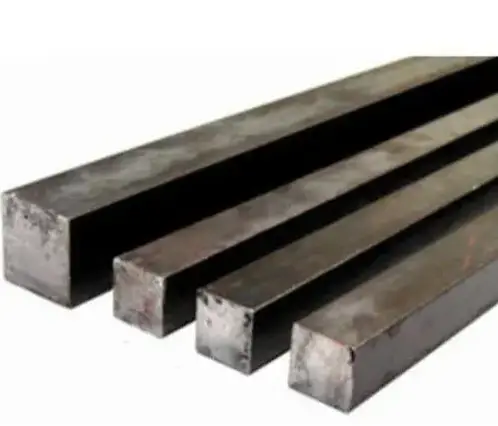
Solid steel square bar - is a solid steel long product with a square cross-section (not hollow). It is produced by hot or cold rolling and is widely used in industry, construction, and mechanical engineering.
Physicochemical Composition:
The composition of low carbon steel square bars is identical to round bars; the only difference is the cross-sectional shape.
Typical Chemical Composition (in %):
| Element | Quantity (%) |
|---|---|
| Carbon (C) | 0.05-0.25 |
| Manganese (Mn) | 0.25-0.80 |
| Silicon (Si) | ≤ 0.40 |
| Sulfur (S) | ≤ 0.05 |
| Phosphorus (P) | ≤ 0.04 |
| Iron (Fe) | Base element |
Physical & Mechanical Properties:
| Property | Indicator |
|---|---|
| Density | ~ 7.85 g/cm 3 |
| Tensile Strength | 350-500 MPa |
| Yield Strength | 200-300 MPa |
| Elongation | high |
| Hardness | low-medium |
| Weldability | very good |
| Plasticity | very high |
Areas of Application
The square cross-section shape provides advantages in certain fields:
-
Construction and Metal Structure
- Metal frameworks
- Frames and supports
- Fences, grating elements
-
Mechanical Manufacturing
- Milled and prismatic parts
- Shank and mold parts
- Low-loaded machine parts
-
General Metal Products
- Furniture frameworks
- Decorative metal structures
- Semi-finished product for mass production
Advantages:
-
Easy assembly due to flat surfaces
-
Easy welding and mechanical machining
-
Low price and wide availability
-
Suitable for forging and bending
-
Convenient for construction purposes
Limitations:
-
Not suitable for applications requiring high strength
-
Poor wear resistance
-
Difficult to achieve high hardness through heat treatment
-
Requires additional corrosion protection
Brief Comparison with Round Bar
-
Square Bar:
- More stable assembly
- Ideal for parts requiring flat surfaces
-
Round Bar:
- More suitable for rotating parts
Conclusion
Low carbon steel solid square bar:
- is widely used in construction and structures
- general mechanical engineering
- mechanical machining fields
but
- has limited capabilities for heavily loaded and wearing parts.
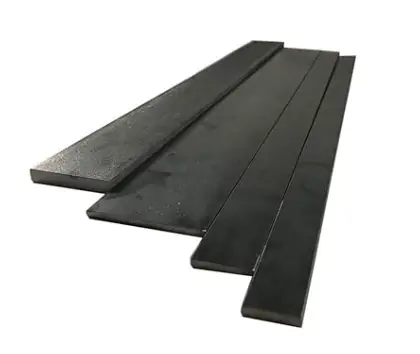
About Steel Strip
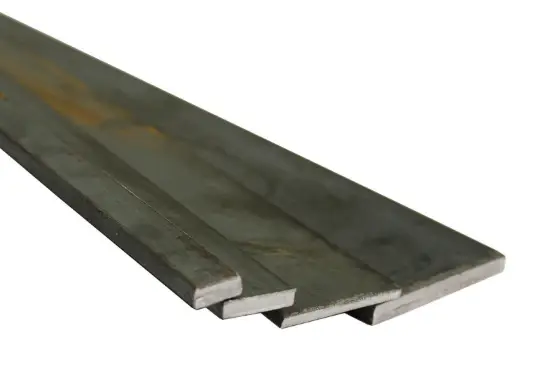
Steel strips (steel strips) are steel materials produced in a wide-thin form (in the form of a strip). They are usually sold as a coil or flat strip.
Physicochemical Composition:
The chemical composition of steel strips depends on the grade and standard, but the general framework is as follows:
| Element | Quantity (%) |
|---|---|
| Carbon (C) | 0.05 - 0.30 |
| Manganese (Mn) | 0.25 - 1.00 |
| Silicon (Si) | ≤ 0.30 |
| Sulfur (S) | ≤ 0.04 |
| Phosphorus (P) | ≤ 0.04 |
| Iron (Fe) | Base element |
Physical & Mechanical Properties:
| Property | Indicator |
|---|---|
| Density | ~ 7.85 g/cm 3 |
| Melting Temperature | ~ 1450-1520 °C |
| Tensile Strength | 270-600 MPa |
| Yield Strength | 180-350 MPa |
| Elongation | 20-40% |
| Hardness | low-medium |
| Electrical and Thermal Conductivity | moderate level |
| Plasticity | very high |
Easily cut, bent, pressed, and shaped.
Areas of Application
The square cross-section shape provides advantages in certain fields:
-
Industrial and Technical Production
- Automotive industry (body, bracket, reinforcing parts)
- Pipe and profile production
- Stamping and pressing parts
-
Household and Furniture
- Home appliances (refrigerator, washing machine bodies)
- Metal furniture and shelving systems
- Electrical panels and cabinets
-
Specialized Fields
- Packaging and strapping strips
Advantages:
-
High formability capability
-
Very good weldability
-
Cost-effective
-
Wide range of sizes and grades available
-
Suitable for mass production
Limitations:
-
Weak corrosion resistance → coating (galvanizing, painting) required
-
Loses strength at high temperatures
-
Not suitable for high loads (especially low carbon grades)
-
Fails quickly in chemically aggressive environments