



Class | Standard | Chemical Composition | Physical & Mechanical Properties
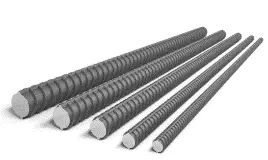
Rebar are ribbed metal bars produced by combining several metal elements. The cores of these metal bars are made of steel, composites, etc. A 500C grade composition features high elasticity and deformation resistance. It is an ideal choice for structural elements requiring high performance in construction projects. When choosing rebar, it is recommended to check the supplier's compliance with standards (e.g., GOST), mechanical test results, and certificates. In the metal industry, “Mars-A” LLC has 30 years of experience and provides steel rebar products meeting quality standards to the market.
Class and Standard:
- A - rebar class, 500 - minimum yield strength (500 MPa); C - indicates weldability.
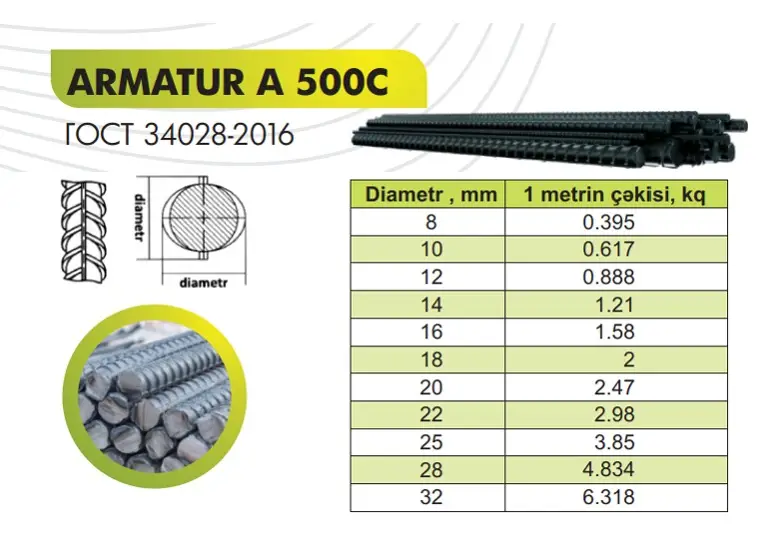
- Often manufactured according to Russian GOST 34028-2016 standard. Complies with other international standards (EN10080, DIN 488, BS 4449, ISO 6935).
Chemical Composition (%):
| Element | Maximum Content | Note |
|---|---|---|
| Carbon (C) | ≤ 0.22 | Maintains good weldability |
| Manganese (Mn) | ≤ 1.60 | Strength and elasticity |
| Silicon (Si) | ≤ 0.80 | Durability |
| Sulfur (S) | ≤ 0.045 | Reduces brittleness |
| Phosphorus (P) | ≤ 0.045 | Reduces cracking risk |
| Cr + Ni + Cu | ≤ 0.30 | Corrosion resistance |
◆ Carbon equivalent (Ceq) ≤ 0.50 → good weldability (indicated by the "C" index)
Physical Properties:
| Property | Value |
|---|---|
| Density | ~ 7850 kg/m 3 |
| Melting point | 1450-1520 °C |
| Modulus of elasticity (E) | ~ 200 GPa |
| Thermal conductivity | ~ 50 W/m*K |
| Linear thermal expansion | 12×10 -6 1/°C |
| Magnetic property | Magnetic |
Mechanical Properties:
| Indicator | Standard Value |
|---|---|
| Yield strength | ≥ 500 MPa |
| Tensile strength | 600 - 650 MPa |
| Rm / Re ratio | ≥ 1.15 |
| Elongation (A5) | ≥ 14% |
| Fatigue resistance | High |
| Bending test | Passes without cracks |
Application Areas | Advantages | Limitations | Terms of Sale
Application Areas:
A500C is mainly intended for load-bearing concrete structures:
-
Monolithic and Precast Concrete
- Foundations
- Columns and beams
- Slabs (flooring, roofing)
-
Civil and Industrial Buildings
- Multi-story residential buildings
- Plants, warehouses, workshops
-
Infrastructure
- Bridges
- Tunnels
- Retaining walls
-
Seismic Zones
- Earthquake-resistant frameworks
Advantages:
Compared to previous A400 and A240 grades, A500C rebar has several advantages:
-
High Strength
- Yield strength: ≥ 500 MPa
- Same load-bearing capacity achieved with smaller diameter and weight
-
Good Weldability
- "C" index → lower carbon equivalent
- Reliable connection possible via electric welding
-
High Plasticity
- Stretches more before deformation
- Prevents sudden structural collapse during earthquakes
-
Excellent Bond with Concrete
- Ribbed surface → strong adhesion with concrete
-
Cost Efficiency
- Reduced steel consumption
- Lighter overall structure weight
Limitations:
Although versatile, A500C has certain limitations in some cases:
-
Low Resistance at High Temperatures
- Strength decreases above 400-600°C
- Special fire protection measures required
-
Corrosion Susceptibility
- Can rust if the protective concrete cover is weak in open environments
- Additional protection needed in marine or chemical environments
-
Caution in Cold Climates
- Risk of brittleness if not selected properly at very low temperatures
- Certified, standard-compliant rebar must be used
-
Cannot Replace High-Carbon Steel
- A500 (non-C) or A600 grades may not be suitable for welding
Quick Comparison:
| Indicator | A400 | A500C |
|---|---|---|
| Yield strength | ~ 400 MPa | ≥ 500 MPa |
| Welding | Limited | Good |
| Plasticity | Moderate | High |
| Seismic compatibility | Moderate | High |
Terms of Sale:
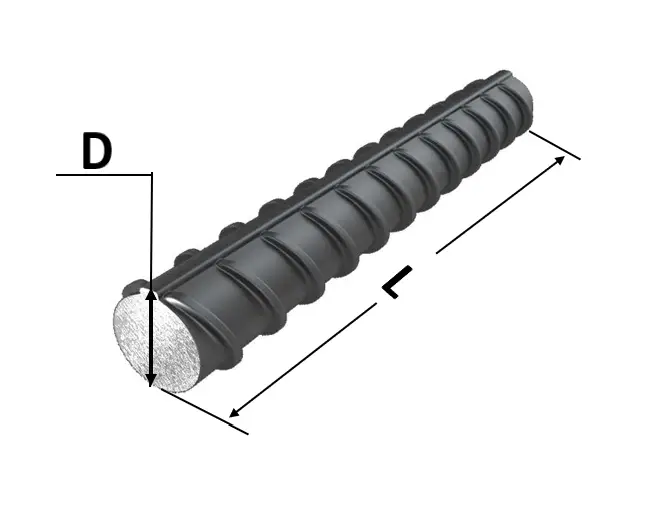
- Rebar price is determined by diameter and volume.
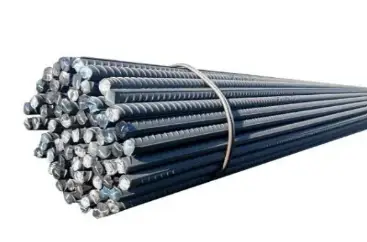
Prices are quoted per meter or per ton. - Orders per ton are supplied in bundles (1 bundle equals 3 ÷ 5 tons).
- Rebar diameter, class grade, manufacturer logo are embossed on the rebar, and additional information is indicated on its label.
- Relevant documents are provided to the buyer upon request (contract, acceptance act, invoice, waybill, weight slip, cash receipt, laboratory test analysis, certificate, etc.)